Saturday, June 28, 2014

Creation Museum: Garden of Eden

Around the U.S.

The next museum highlight was a recreation of a small part of the Garden of Eden. With lively model animals and luscious plastic vegetation, this room almost felt like it was outdoors.

These llamas were one part of the exhibit that stood out. One seems to be craning its neck to observe some distant object, while the other smirks at the viewer.
Llamas

The creature below was one of the more unusual. It looks like a leopard, except for its mottled pattern of scales. Apparently it is an artist's idea of one type of dinosaur, and it is seen here voraciously devouring a pineapple.
Pineapple-Eating Dinosaur

Finally, these two kangaroos could be seen peeking out of the vegetation.
Kangaroos

Thursday, June 26, 2014

Creation Museum: Dinosaur

Around the U.S.

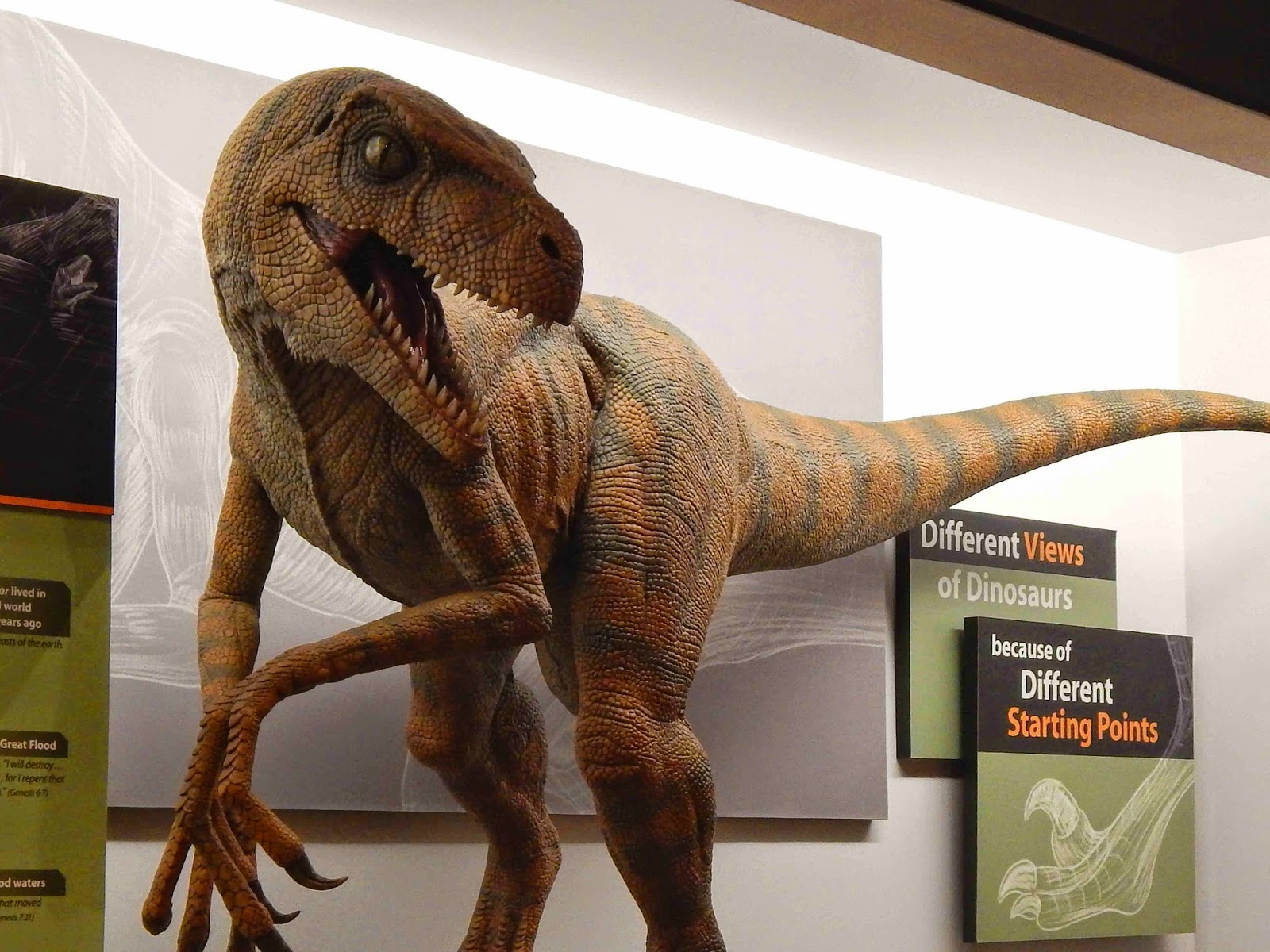
As I mentioned earlier, the Creation Museum exhibits a number of life-sized dinosaurs. While there is an entire room, which we will get to later, dedicated to this purpose, I passed a lone dinosaur specimen early on along the exhibit trail.

This model is a Tyrannosaurus Rex, with sharp, knife-like teeth. It could grow to forty feet long and twenty feet high, with a weight over seven tons. Maybe this model wasn't quite life size, but it definitely was bigger than any T. Rex I'd like to meet!
Tyrannosaurus Rex

Another exhibit displayed ancient scrolls from around the world. The scroll shown below dates from around 1825. Scrolls were often made of vellum produced from animal skins, resulting in a document that could last almost indefinitely. The scroll below contains Hebrew portions of Genesis and Exodus.
Hebrew Scroll 

This exhibit depicts a famous scene of Moses and the Ten Commandments. As you can probably tell from the stone tablets, Hebrew is read from right to left.
Ten Commandments

Sunday, June 15, 2014

Creation Museum: Dinosaur Dig

Around the U.S.

Located in Petersburg, Kentucky, the Creation Museum provides a detailed look at the origin and history of our planet and its inhabitants from a Biblical perspective. Its impressive displays include life-sized dinosaurs, a number of large fossils, and a detailed model of Noah's Ark. Outside, a petting zoo, landscaped garden, and three-acre lake provide additional activities for visitors.
Creation Museum

The first display includes an extremely realistic life-sized fossil excavation, complete with a dinosaur fossil buried in the rock.
Dinosaur Dig

Great care must be taken when unearthing the fossilized bones so they are not damaged. This archaeologist is using a number of tools to extract this dinosaur skeleton.
Archaeologist

Thursday, June 12, 2014

Icy River

Around Ohio

Because of the extremely cold weather, the Scioto River was covered in a layer of ice and snow. The viewing deck shown below provides an excellent view out over the river. The last time I had been here, there were ducks swimming in the water. The sparkling river and chirping birds were nowhere to be seen on this bleak winter day.
Icy Scioto River

All signs of life were gone, except for a few footprints in the fallen snow. Nevertheless, the stillness and placidity of the scene seemed to add to the contrast of dark railings and brilliant snow.
Viewing Deck

Friday, May 23, 2014

Swan and Wolves

Around Ohio

This white swan was one of the few birds that could survive the winter at the zoo. It was sitting near a small pond. Although the pond was mostly covered in ice, it had a small hole at the center where the swan could get a drink.
White Swan

These wolves seemed quite at home in the snow. Their natural habitat in Canada and Alaska can get much colder than our mild winters.
Wolves

Sunday, May 18, 2014

Reindeer

Around Ohio

Another cold-loving animal, and a famous one as well, is the reindeer. They seemed to be enjoying the cold weather just as much as the polar bear. While fourteen distinct subspecies of reindeer have been recognized, I doubt if I could tell them apart. However, their thick fur and large antlers set them apart from other deer species.
Reindeer

Friday, May 16, 2014

Bears

Around Ohio

Every year, the Columbus Zoo creates a luminous display of Christmas lights throughout the zoo. While these are best viewed at night, I planned my recent tour to include enough daylight hours to visit the animals as well. Some of the animals are moved elsewhere during the winter, but many of them remain at the zoo.

The brown bear below didn't seem to mind the cold weather at all. While I watched, it playfully rolled over on its back in the snow.
Brown Bear

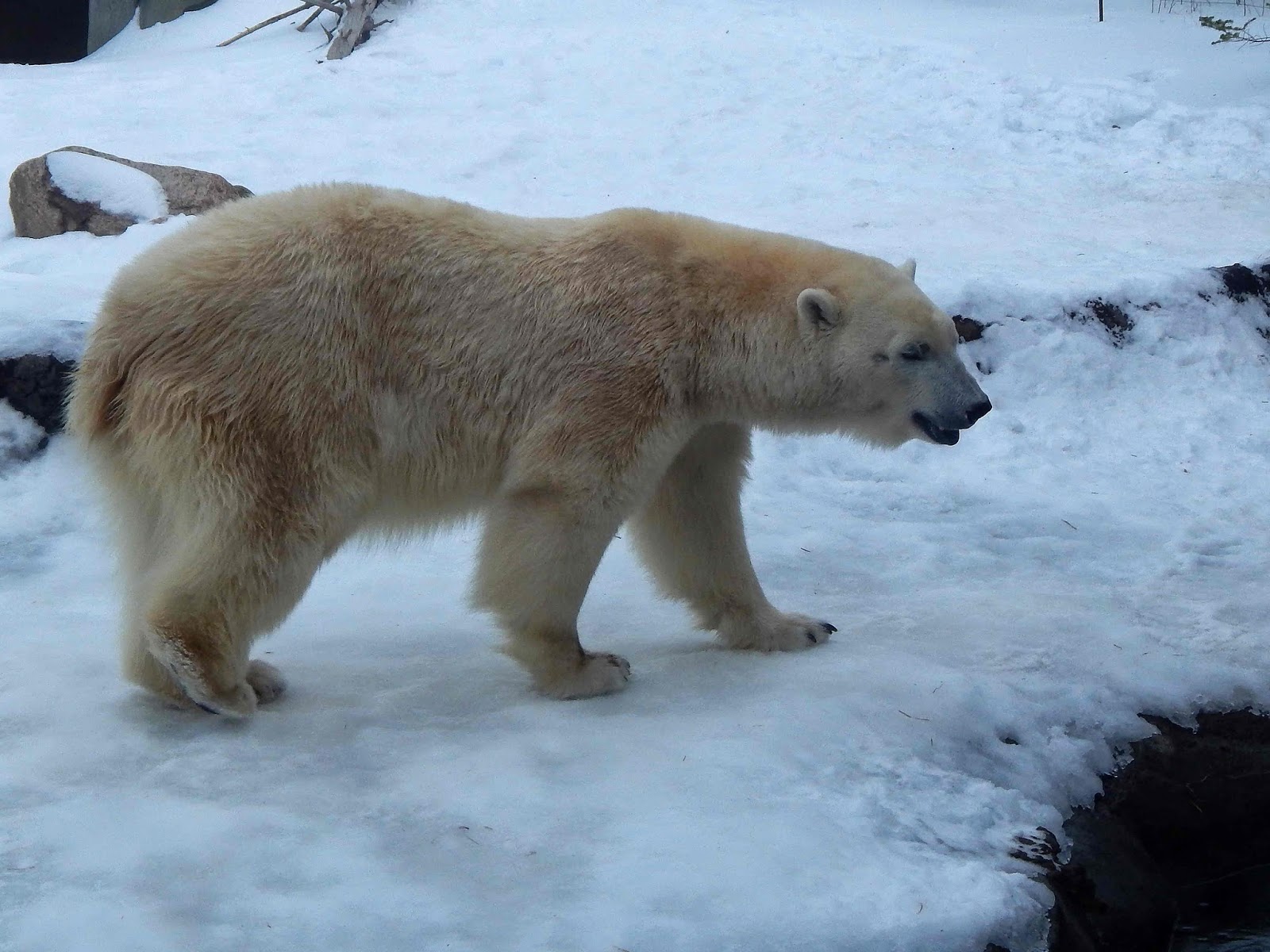
Polar bears, such as the one below, are native to climates even colder than the day I visited the zoo. Their layers of thick fur insulate them from frigid air and ice-cold water. This bear almost looks as if it were grinning.
Polar Bear

Monday, April 21, 2014

Ohio Caverns 2

Around Ohio

The picture below shows one of the iron oxide formations that add color to the ceiling throughout much of the caverns. Although the dim lighting in the caves masks some of the bright colors, they come out quite clearly when exposed to a camera flash.
Iron Oxide Formations

One of the more unusual formations in the cave is shown below. It is called a helictite because of its unusual shape. It seems to resemble a water spigot or old hand pump.
Water Spigot

Monday, April 14, 2014

Ohio Caverns: Crystal King

Around Ohio

The Crystal King is the largest stalactite found in the Ohio Caverns. With a length of almost five feet and an estimated weight of 400 pounds, it is also one of the largest stalactites in Ohio. The Crystal King is found at the deepest point in the cave from the surface.
Crystal King

The stalactites and stalagmites in the photo below reminded me of a shark's mouth. The minerals in this picture are known as dual formations because they consist of calcite stalactites growing on an iron oxide base.
Shark's Mouth

Thursday, April 3, 2014

Ohio Caverns

Around Ohio

Located in western Ohio, the Ohio Caverns showcases some amazing crystal formations spread throughout a maze of winding tunnels. The abundance of crystals, which have taken thousands of years to form, makes the caverns unique.

As with most underground passages, the majority of the Ohio Cavern's tunnels are quite narrow, but the picture below shows a slightly larger area. The oranges and browns on the ceiling are caused by aqueous iron that trickles down through the rock above and oxidizes when it reaches the cave ceiling.
Crystal Cave 

This next shot depicts a more tunnel-like part of the caverns. When the caves were first discovered, most of the tunnels were partially obstructed by mud and other sediment, which had to be cleared away to make the passageways passable.
Rocky Passage